A med spa consultation enquiry should help the team begin an appropriate conversation. It should not try to complete clinical screening in a public marketing form. Ask enough to route the enquiry, explain the consultation step and keep the detailed patient process in the practice’s approved system.
Define the first conversation the form supports
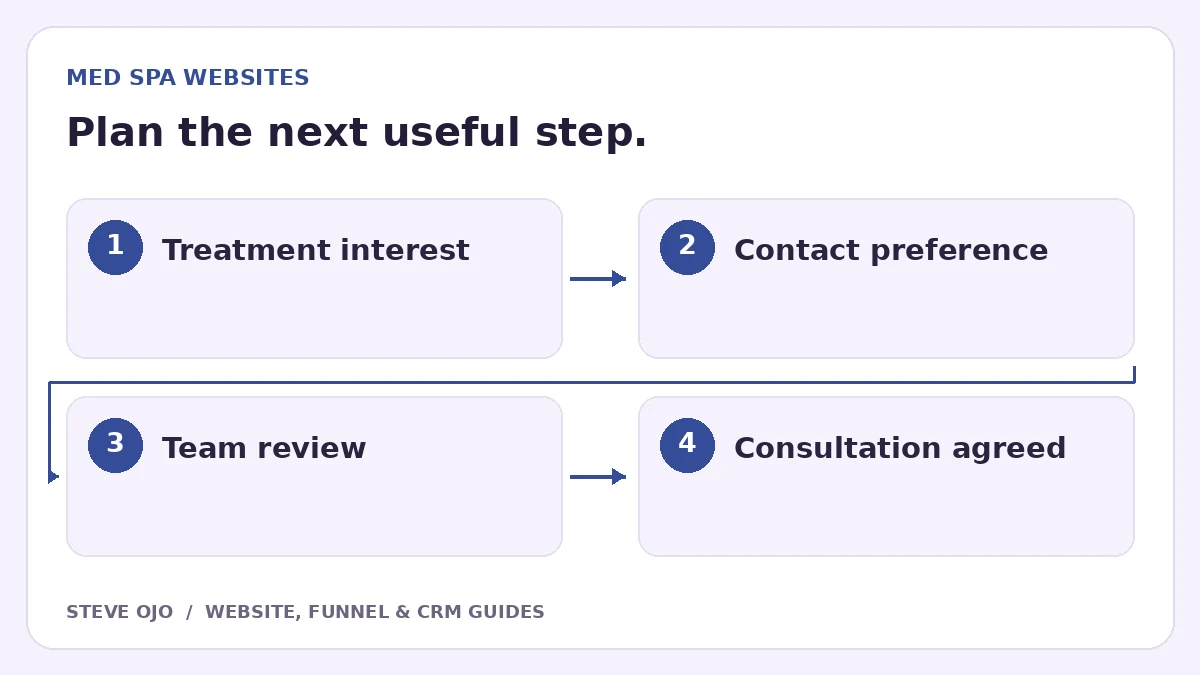
Start with the service or treatment category the person is interested in and their preferred contact method. Add an “I am not sure” choice for visitors who need guidance. The team can use that information to arrange a consultation, without the form recommending a treatment.
Make the offer precise. A consultation request is not treatment approval, a medical recommendation or a guaranteed appointment. Explain whether staff will call to discuss availability, send a booking link or review the request first. Match every button to that actual process.
Separate enquiry questions from clinical intake
A short first form can use name, reply details, treatment interest and broad scheduling preference. Avoid collecting medical history, medication details, identity documents or intimate photographs through a generic marketing form. The practice should decide what belongs in its patient-intake system.
Ask only questions that change the next action. If a field is included because it might be interesting later, remove it from the first step. Have the clinic approve access controls and how enquiries are handled before connecting a marketing CRM.
Explain contact choices in plain language
Show what will happen after submission and distinguish service communication from optional marketing. A visitor asking about one consultation should not have to interpret a vague paragraph about every future campaign. Have the business approve the consent wording for its channels and audience.
Make required fields visible and leave optional preferences optional. If the person chooses email, do not force a phone call as the only response route without explaining why. Give them a way to correct their enquiry after submitting it.
Route interest without automating clinical judgement
Store the broad service category and assign the appropriate team queue. An acknowledgement can confirm receipt and give a reply window. It should not say the visitor is suitable for a procedure or promise a result based on a form answer.
When a real consultation is booked, stop generic messages asking the person to book. Staff should be able to pause the marketing sequence if the person replies with a question. Treat any clinical discussion as outside the scope of the marketing automation.
Review the form on mobile before launch
Use a fictional enquiry for a named treatment and another for “not sure.” Confirm that the team receives the selected interest and contact preference, that errors are readable and that the success message does not claim treatment approval. Check the email acknowledgement for the same wording.
This is a narrower task than the whole med spa enquiry-to-consultation journey. Improve the first form, then test its connection to the calendar and staff response. Measure suitable enquiries and confirmed consultations separately rather than treating every submission as a patient booking.
Sources and product documentation
Product details checked 27 October 2026. Confirm current plans and the exact behaviour in your account before implementation.
Need help applying this to your business?
Steve Ojo designs websites, funnels and connected CRM workflows, working remotely from Nigeria. Share your current process and the outcome you need.
Explore the related service Discuss your project