



Portal structure
I’ll map the dashboard, resources and navigation to the client journey.

I’ll design a branded place where clients can find the resources, updates or access included in their programme, then plan permissions around your platform.
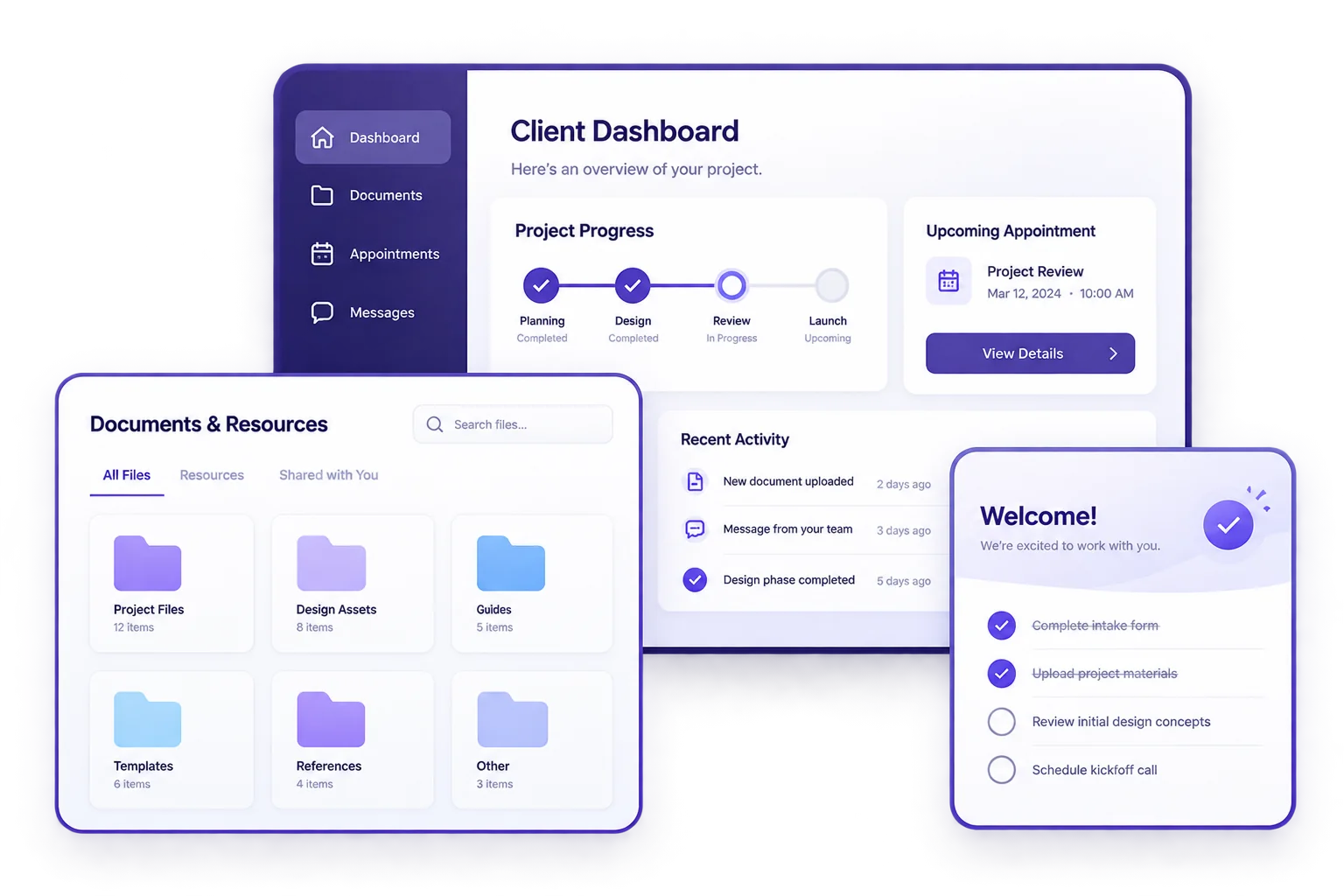
A course sales funnel helps someone decide to join. The portal is the private place they use after joining.
Compare with Course Sales Funnels →












After enrolment, clients should not have to search emails for every resource. I’ll organise the portal around the tasks they actually return to complete.
I’ll organise the place clients return to after joining: dashboard navigation, resources, access groups, account help and the information they need to continue their programme.
I’ll map the dashboard, resources and navigation to the client journey.
I’ll configure supported membership, role or purchase-based access after confirming requirements.
I’ll connect onboarding instructions, account recovery and a clear support contact.
I’ll test sign-in, the right and wrong access permissions, the welcome route and how a client gets help when access fails.
I’ll map the dashboard, resources and navigation to the client journey.
I’ll configure supported membership, role or purchase-based access after confirming requirements.
I’ll connect onboarding instructions, account recovery and a clear support contact.
These samples show programme offer and enrolment design. They are adjacent references; an authenticated client portal is not visible in the portfolio screenshots.
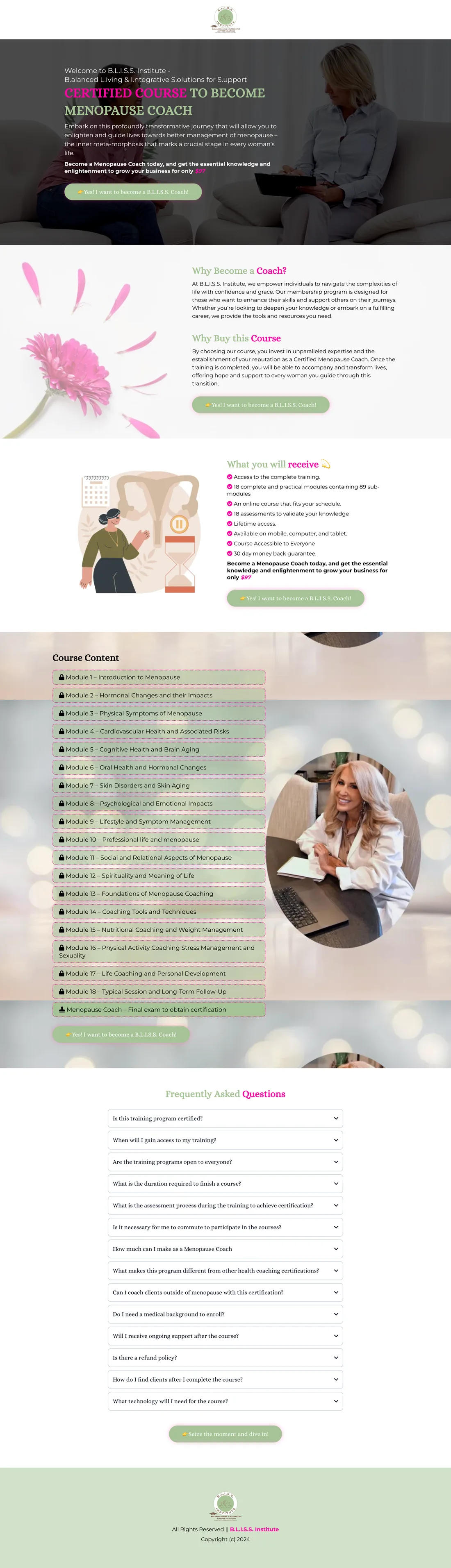
B.L.I.S.S. Institute’s menopause coach course page explains the programme, lists training inclusions, and presents an eighteen-module curriculum. Repeated enrolment links and practical FAQs support evaluation before joining the online programme.
Read the case study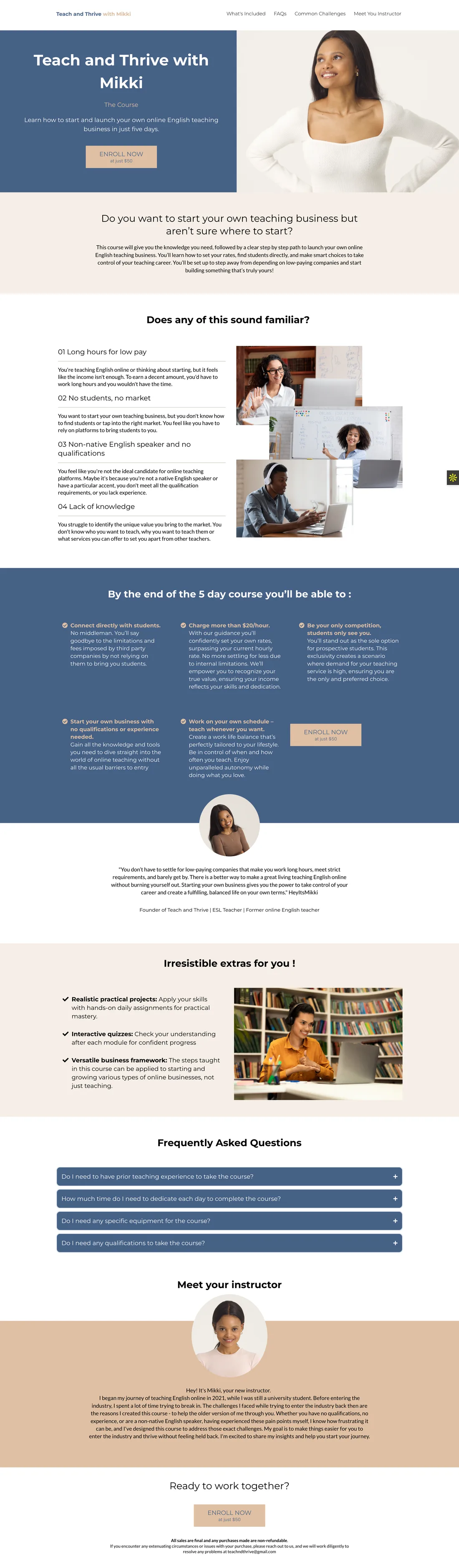
Teach and Thrive with Mikki presents a course for people starting an online English-teaching business. Personal-brand imagery, course inclusions and enrolment prompts explain the offer before the visitor commits.
Read the case study
Jasmine Elizabeth’s page introduces a personal-branding course through founder imagery, a video, curriculum previews, social proof, FAQs, and a purchase form. The long-form structure explains the offer before enrolment choices.
Read the case studyThe funnel presents and sells access; the portal is the client’s working area after joining. I can scope either or both.
I’ll verify the chosen platform’s login, membership and permissions features before promising roles or gated content. The portal structure follows those actual capabilities.
B.L.I.S.S., Mikki and Jasmine Elizabeth show course or programme offer pages. They are adjacent design references, not evidence of an authenticated portal in those projects.
Tell me which client groups need which resources and who supports them. I’ll turn that into a usable portal and access test plan.