

A cleaning website should help a visitor answer three questions quickly: do you clean my type of space, do you serve my area, and how do I get an accurate quote? Beautiful design helps only when those answers are easy to find.
Separate the jobs you actually take
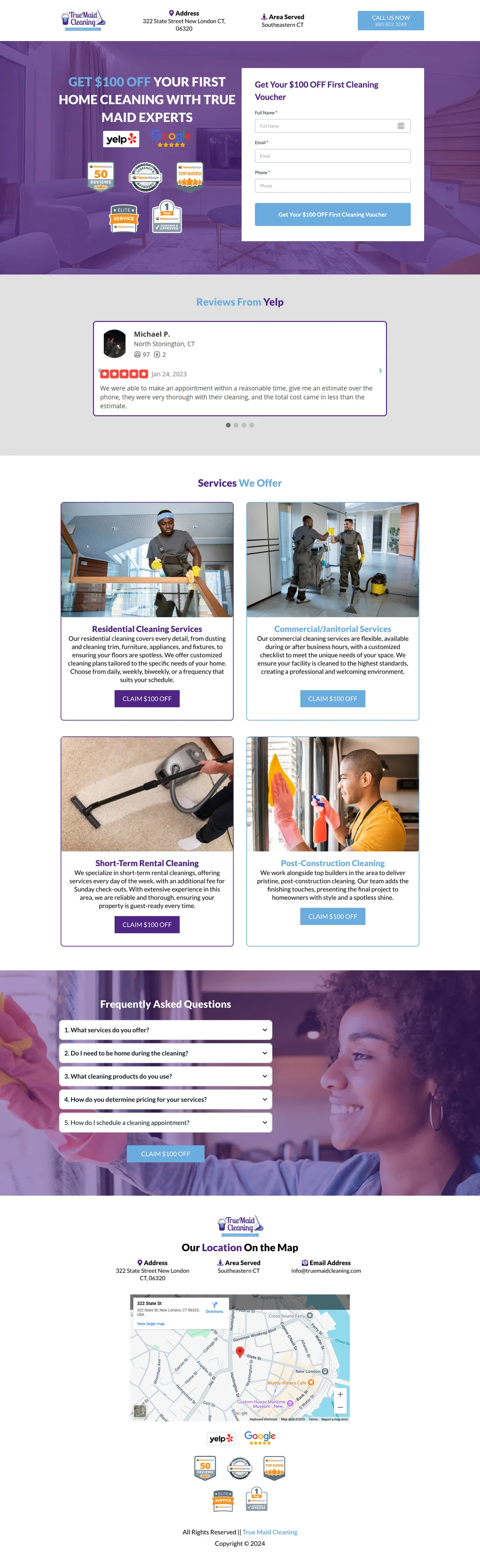
List your services before building pages. House cleaning, deep cleaning, move-out work and office cleaning differ in scope, price drivers and availability. Give your main services dedicated sections or pages with what is included, what is excluded, and what details you need for a quote. Avoid copying nearly identical pages for every neighborhood.
If you serve homes and commercial sites, give each audience a clear route from the homepage. A facility manager’s request may need square footage, schedule and site access, while a homeowner may need bedrooms, bathrooms and preferred date.
Make the quote request useful and short
A quote form should gather only what helps estimate or schedule the job: name and contact method, service type, postcode or address area, property size, desired timing and a short note. Mark optional fields clearly. For larger commercial jobs, invite a walkthrough instead of pretending a fixed online price is always accurate.
After submission, tell the visitor when to expect a reply and whether the figure is an estimate. Send the request to the right person, save the source in your CRM and notify the team. Test that the form works on mobile and sends the details intact.
Show local proof without inventing coverage
State the real service area and practical limits. Add original crew and work photos with permission, insurance or licensing details where relevant, and reviews you can verify. Explain how access, supplies and rescheduling work. These answers reduce calls that otherwise happen just to establish trust.
Build a path from search to a response
A useful path is service search → relevant page → scope and trust → quote request → acknowledgement → human follow-up. Add a call button for urgent questions, but keep a form for visitors browsing after hours. If you use an instant reply, label it as acknowledgement and give a real response window.
Measure qualified quote requests and jobs won by service, not only visitor counts. If a page draws the wrong jobs, refine its wording and exclusions. If good enquiries are not converted, inspect response time and estimate clarity before rebuilding the page.
Check the site like a customer
Repeat after changing your service list, coverage or form fields. A current site with a broken quote handoff is less useful than a modest site that reliably gets each request to the right person.